
How to Season a Cast Iron Skillet (First Use and Maintenance)
Seasoning isn’t a one-time event — it’s a layer of polymerized oil that builds with every cook. The first seasoning takes 90 minutes. Maintenance takes 3 minutes after each use. Here’s the exact process for both, plus how to fix rust and stickiness when they appear.
🔗 This page contains affiliate links. As an Amazon Associate, HotKitch earns from qualifying purchases — at no extra cost to you.
What Seasoning Actually Is
Seasoning is not grease or oil sitting on the surface of the pan. It’s oil that has been heated past its smoke point until it polymerizes — bonding to the iron at a molecular level and forming a hard, smooth, non-stick layer called a patina. Each layer is microscopically thin. A well-seasoned skillet has dozens of these layers built up over months and years of cooking.
This is why a new Lodge skillet looks grey and rough while a vintage pan looks black and glassy — the difference is years of accumulated polymerized layers. You’re starting that process from the beginning, and the first seasoning is the foundation the rest of the patina builds on.
Choosing the Right Oil
The best oils for seasoning have a high smoke point and polymerize fully — leaving a hard finish rather than a sticky residue. The wrong oil at the wrong temperature produces gummy, tacky seasoning that attracts dirt and doesn’t improve.
- Flaxseed oil: The traditional recommendation for first seasoning — polymerizes into the hardest, most durable initial layer. Apply extremely thin coats; too much flaxseed oil flakes off.
- Crisco or vegetable shortening: The classic Lodge recommendation — easy to apply evenly, reliable results, widely available.
- Canola oil: High smoke point, neutral flavor, readily available. Solid all-purpose seasoning oil.
- Avoid: Olive oil (too low a smoke point), butter (burns and doesn’t polymerize cleanly), and coconut oil (can go rancid in the pores of the iron over time).
The most important rule: apply the thinnest possible coat. Wipe the entire pan — inside, outside, and handle — with oil, then wipe it all off with a clean dry cloth. The pan should look almost dry, not greasy. Too much oil produces sticky, flaking seasoning.
First Seasoning — Step by Step
- Preheat your oven to 450–500°F (230–260°C). The temperature needs to exceed the oil’s smoke point to trigger polymerization.
- Wash the pan with hot soapy water. New pans often have a light protective coating from the factory — remove it. This is the only time soap is appropriate on cast iron.
- Dry completely. Water causes rust. Put the pan on the stovetop over medium heat for 2–3 minutes until all moisture evaporates — you’ll see it steam off.
- Apply a very thin coat of oil. Cover every surface — inside cooking surface, outside, handle. Then wipe almost all of it back off with a clean cloth. The pan looks nearly dry.
- Place upside down in the oven. Inverted position allows excess oil to drip off rather than pool and form sticky spots. Put a sheet of foil on the rack below to catch drips.
- Bake for 1 hour at 450–500°F. Don’t open the oven during this time.
- Let cool in the oven. Turn the oven off and leave the pan inside until it’s cool enough to handle — at least 45 minutes. Don’t rush this step.
- Repeat 3–4 times for the best initial seasoning base. Each layer builds on the last.
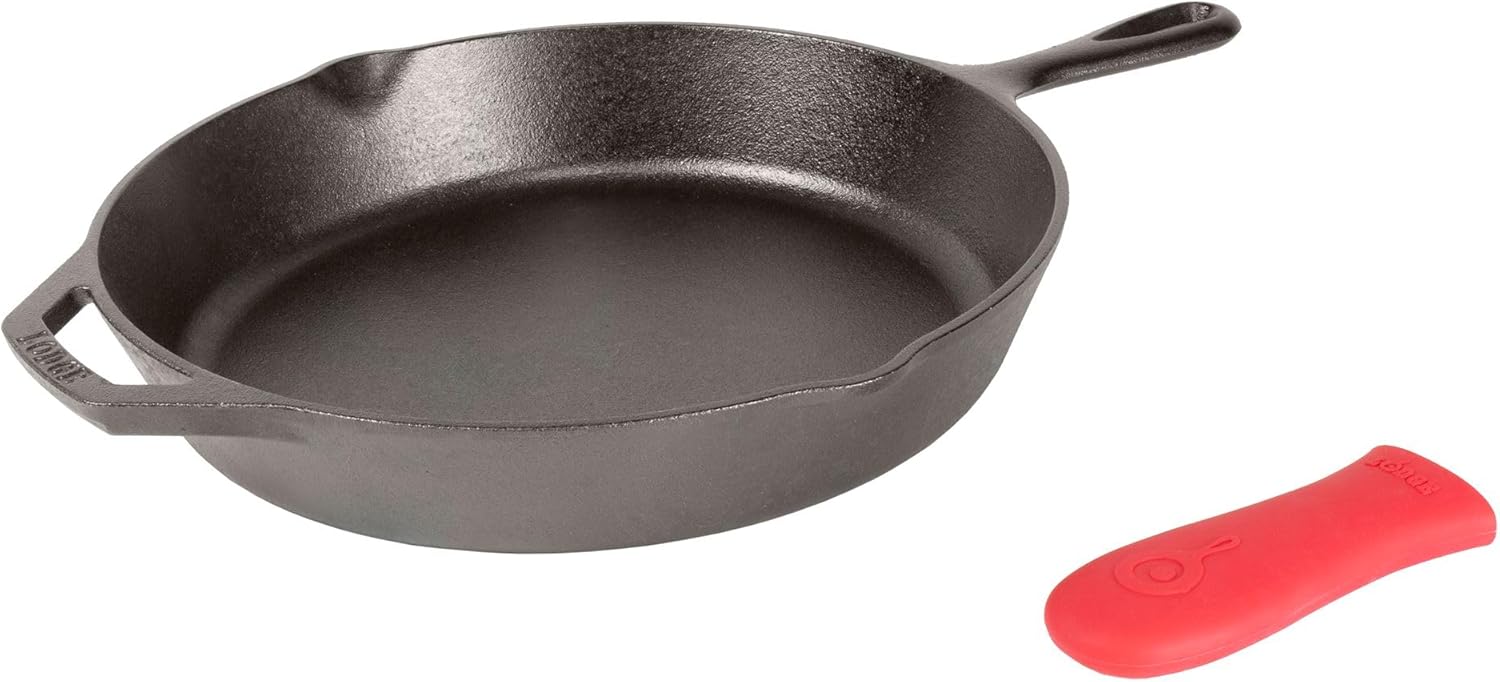
Lodge 12″ Cast Iron Skillet
American-made since 1896, preseasoned with vegetable oil, and ready to build on from your first cook. The 12″ size handles everything from a whole chicken to a batch of cornbread. Heavier than carbon steel but unmatched for heat retention and longevity, it outlasts every other pan in the kitchen.
- Preseasoned at the factory – ready to cook on from day one
- Works on all heat sources including induction
- Made in the USA – lifetime guarantee, no planned obsolescence
Maintenance After Every Cook
Daily maintenance is what turns a well-seasoned pan into a great one over time. The routine is faster than washing a standard pan:
- While the pan is still warm (not screaming hot), rinse with hot water. Use a stiff brush or chain mail scrubber for stuck bits — no soap.
- Dry immediately and completely. Any moisture left on cast iron starts rusting within hours. A minute on the stovetop over low heat ensures it’s fully dry.
- Apply a very thin oil coat. A few drops of canola oil wiped over the cooking surface with a paper towel, then buffed off — the pan looks shiny but not oily. This protects the seasoning between uses.
- Store in a dry place. Don’t stack other pans directly on the cooking surface — put a folded paper towel between pans if stacking.

Fixing Rust and Stickiness
Surface rust (orange spots): Scrub with a steel wool pad or chain mail scrubber and hot water until the rust is gone — this removes seasoning too, which is fine. Dry completely, then re-season with 2–3 rounds in the oven as described above. Rust is not permanent damage; it’s a surface issue that fixes in an afternoon.
Sticky or gummy surface: This means too much oil was applied during seasoning — it polymerized into a sticky layer rather than a hard one. Scrub the pan with hot water and a stiff brush, dry completely, then re-season with a much thinner oil application. The key fix is applying less oil, not more heat.
Food sticking despite seasoning: Usually caused by one of three things — cooking acidic food (tomatoes, citrus, wine) which strips seasoning; not preheating the pan long enough before adding food; or adding cold food to a hot pan with insufficient fat. All three are technique issues, not seasoning failures. Increase preheat time to 3–4 minutes over medium before adding anything.
Frequently Asked Questions
Can I use soap on cast iron?
Occasionally, yes — modern dish soap is mild enough that it won’t strip a well-established seasoning if used briefly and rinsed quickly. The old advice against all soap dates from when soaps contained lye, which did strip seasoning. That said, soap isn’t necessary for daily cleaning — hot water and a stiff brush remove food effectively without soap, and daily soap use will gradually thin the seasoning over time. Use it when you need to remove something you can’t scrub off, and re-oil afterward.
Can I cook tomatoes or acidic food in cast iron?
Yes, but with limitations. Short-duration cooking of acidic foods — deglazing with wine, adding a squeeze of lemon — won’t significantly damage seasoning. Long-simmering acidic dishes like tomato sauce cooked for 30+ minutes will strip seasoning and can also pick up a metallic flavor from the iron. On a well-seasoned pan, occasional acidic cooking is fine; just re-oil after cleaning. Use stainless steel or enameled cast iron for extended acidic cooking.
How long does it take to build a non-stick surface on cast iron?
With proper maintenance, a new pan develops noticeably improved non-stick properties within 2–3 months of regular use. Full smooth, near non-stick performance typically takes 6–12 months of consistent cooking and proper cleaning. The fastest path to good seasoning is cooking fatty foods regularly — bacon, chicken thighs, sausage — which deposit fat into the pan’s pores with every cook. Eggs sliding cleanly in cast iron is the benchmark most cooks aim for, and it usually happens in the 3–6 month range with regular use.
Can I put cast iron in the dishwasher?
No. Dishwashers strip seasoning completely and cause rapid rust due to the sustained hot water and steam exposure. A pan run through a dishwasher needs to be fully re-seasoned from scratch. Hand washing with hot water and a brush takes under a minute and preserves the seasoning you’ve built up.