
What Are Two Factors to Consider
When Buying a Stove?
Fuel type and installation — the two decisions that lock you in. Gas vs electric vs induction with test data, plus the hidden costs most buyers miss.
Buying guides love to give you 10 factors to consider when buying a stove. Most of them are filler — color, brand prestige, control panel layout. Those matter, but they don’t determine whether you’ll be happy with your stove three years from now.
After testing gas ranges, induction cooktops, and electric smooth-tops for the past two years at HotKitch, we’ve watched buyers consistently regret two things: choosing the wrong fuel type for their cooking style, and ignoring installation requirements until the stove is already on the delivery truck.
Those are the two factors that matter most. Everything else is adjustable, returnable, or cosmetic. Get these two wrong and you’re stuck with a $500–$3,000 mistake bolted to your kitchen.
Factor 1: Fuel Type — Gas, Electric, or Induction
This is the decision that affects every meal you cook for the next 10–15 years. Each fuel type cooks differently, costs differently to operate, and requires different infrastructure. Here’s what we measured.
Gas
Gas gives you visible flame control, works during power outages (burners can be lit manually), and heats any cookware including round-bottom woks and copper pans. In our testing, gas boiled 2L of water in 8 minutes 15 seconds — the slowest of the three types. Energy efficiency is around 40% — the majority of the heat goes into heating your kitchen, not your food.
The real trade-offs: gas produces indoor air pollutants (NO₂, CO, formaldehyde) that require ventilation. If you don’t have a range hood venting outside, gas stoves measurably worsen indoor air quality. A 2022 Stanford study found that gas stoves emit benzene even when turned off. This isn’t a reason to panic, but it is a reason to invest in proper ventilation if you go gas.
Gas also requires a gas line. If your home doesn’t have one, installation runs $500–$1,500 depending on distance from the main line to your kitchen. Factor that into the real cost.
Electric Smooth-Top
Electric radiant cooktops are the most common type in American kitchens — flat glass surface, hidden heating elements, easy to clean. They’re cheaper than gas or induction upfront, require only a 240V outlet (standard in most homes), and produce consistent, dry oven heat that’s better for baking than gas.
The limitations are real: electric smooth-tops are slow. In our testing, boiling 2L of water took 9 minutes 40 seconds. Temperature response is sluggish — when you reduce heat, the glass stays hot for minutes, making it easy to overcook. And the glass surface can crack under impact from heavy dropped pots. If you sear meat regularly or do any wok cooking, electric smooth-tops will frustrate you.
Induction
Induction uses magnetism to heat the pan directly — not the glass surface. In our testing, it boiled 2L of water in 5 minutes 30 seconds, nearly 3 minutes faster than gas. Energy efficiency hits 84% versus 40% for gas. The surface stays cool to the touch seconds after removing the pan — a genuine safety advantage for households with children.
The two real limitations: induction requires magnetic cookware (cast iron, magnetic stainless steel — not aluminum, copper, or glass). And it stops working during power outages. If you own significant non-magnetic cookware, factor in $200–$400 to replace your pots and pans. We cover this in detail in our Induction vs Gas comparison with lab test data.
| Metric | Gas | Electric | Induction |
|---|---|---|---|
| Boil time (2L) | 8 min 15 sec | 9 min 40 sec | 5 min 30 sec |
| Energy efficiency | ~40% | ~70% | ~84% |
| Cookware | Any | Flat-bottom only | Magnetic only |
| Surface safety | Hot grates + flame | Hot glass | Cool to touch |
| Works without power | Yes | No | No |
| Cleaning | Difficult (grates) | Moderate | Easy (flat, cool) |
| Range price (avg) | $600–$2,500 | $400–$1,500 | $800–$3,000 |

📖 Already know your fuel type?
Jump to our tested picks: Best Gas Ranges 2026 · Best Induction Cooktops 2026
Factor 2: Installation Requirements — The Cost Nobody Budgets For
This is the factor that catches buyers after the purchase. A stove isn’t a toaster — you can’t just plug it in anywhere. The installation requirements depend on what you have now and what you’re switching to.
Switching From Electric to Gas
You need a gas line run to your kitchen. Cost: $500–$1,500 depending on your home layout and distance from the main gas line. You’ll also need a range hood with adequate CFM rating — gas produces combustion byproducts that need to be vented outside. A basic vented hood runs $150–$400 installed. Total hidden cost: $650–$1,900 on top of the stove price.
Switching From Gas to Electric or Induction
You likely have a 120V outlet behind your gas stove (for the ignition). Electric and induction ranges require a 240V, 40–50 amp circuit. An electrician will need to run a new line from your breaker panel. Cost: $300–$800. Your existing gas line should be capped by a licensed plumber ($75–$150). Total hidden cost: $375–$950.
Staying With the Same Fuel Type
If you’re replacing gas with gas or electric with electric, installation is usually straightforward — slide out the old, slide in the new, connect to the existing hookup. The main thing to measure: the cutout width. Standard freestanding ranges are 30 inches wide. If you’re upgrading to a 36-inch pro-style range, you’ll need to remove cabinetry on one or both sides. Measure before you buy.
Freestanding vs. Slide-In
Freestanding ranges have finished sides and a rear backsplash — they can stand alone anywhere. Slide-in ranges have unfinished sides and sit flush between cabinets for a built-in look, with controls on the front. A slide-in cannot replace a freestanding without cabinet modifications. A freestanding can usually replace either type. Know which you have before shopping.
What About Size, Brand, and Features?
These are real considerations, but they’re secondary to fuel type and installation because they’re flexible.
Size: 30 inches is the standard and fits 90% of American kitchens. Only consider 36″+ if you’re remodeling or have verified your space accommodates it.
Brand reliability: Consumer Reports data from 50,000+ range owners shows LG and Frigidaire lead on reliability, while Samsung and KitchenAid score below average — despite premium pricing. We break this down with specific data in our Most Reliable Stove Brand 2026 guide.
Features: Convection, air fry mode, smart connectivity, self-clean — these are nice-to-haves. None of them compensate for the wrong fuel type or an installation that doesn’t fit your home. Get the fundamentals right first.
Quick Decision Matrix
| Your situation | Best fuel type | Installation note |
|---|---|---|
| Existing gas line, cook with a wok, want flame control | Gas | Verify range hood CFM; replace if under 200 CFM |
| No gas line, tight budget, bake often | Electric | Verify 240V outlet exists; cheapest install |
| Want speed + safety, own magnetic cookware | Induction | Verify 240V 50A circuit; may need panel upgrade |
| Switching from gas to induction | Induction | Budget $375–$950 for electrical + gas cap |
| Frequent power outages in your area | Gas | Only fuel type that works without electricity |
| Renter, can’t modify kitchen | Portable induction | Plugs into standard 120V; no install needed |
The Bottom Line
Every stove buying guide lists 10 things to think about. But fuel type and installation are the two that lock you in — everything else can be returned, exchanged, or lived with. Choose the fuel that matches how you actually cook, verify that your kitchen can support it before you buy, and the rest of the decision becomes straightforward.
If you’re still weighing gas versus induction specifically, our Induction vs Gas comparison has side-by-side lab test data on boil time, simmer precision, energy cost, and indoor air quality. If you’ve already decided on a fuel type, jump straight to our tested picks.
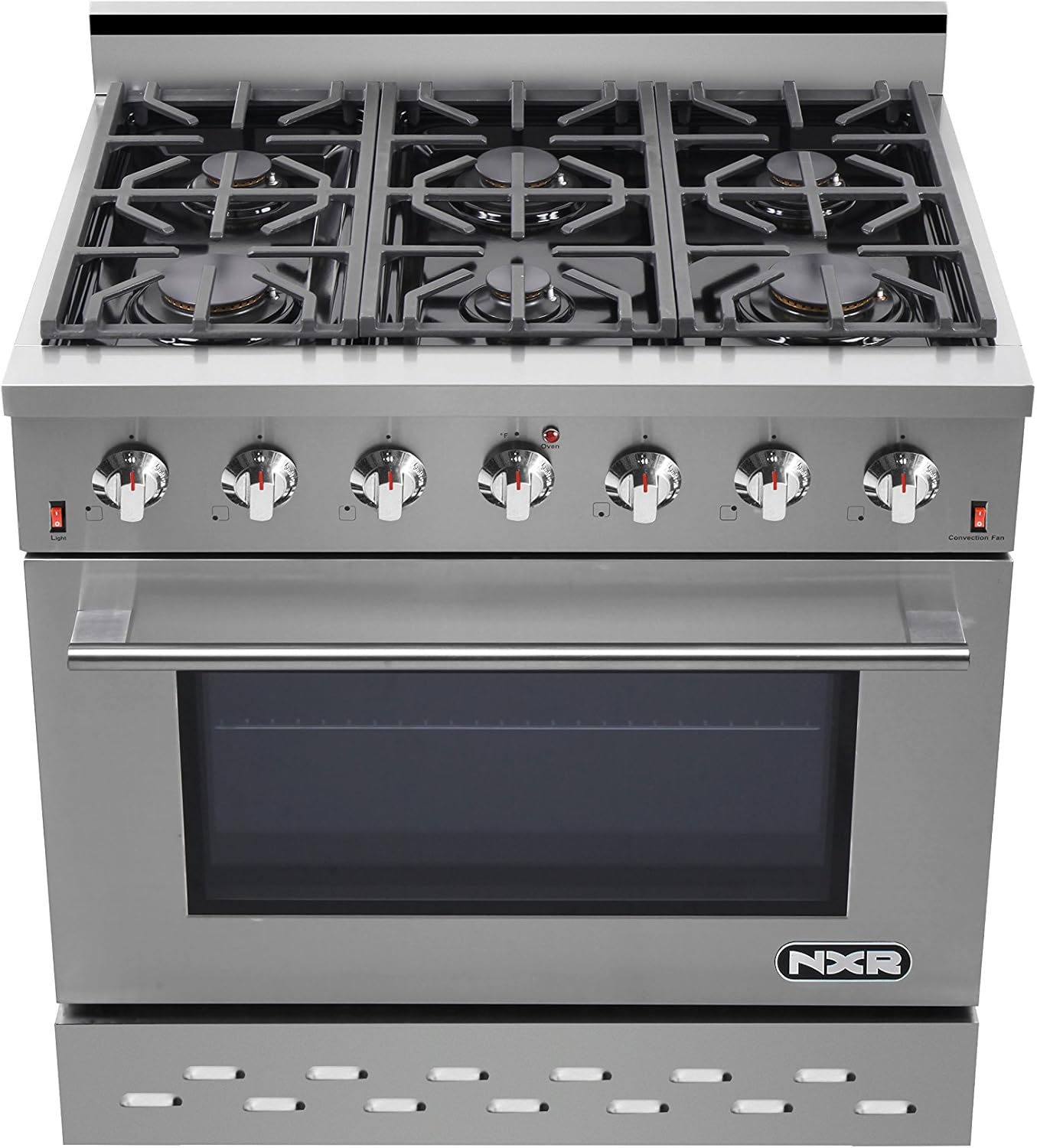
- Best gas range: NXR SC3611 — 30″ freestanding, 4 sealed burners + convection oven, pro-style performance at a mid-range price. Full review →
- Best induction cooktop: Duxtop 9600LS — portable, 20 power levels, precise simmer, works on 120V. The easiest way to try induction without commitment. Full review →
Frequently Asked Questions
What are two factors to consider when buying a stove?
Fuel type (gas, electric, or induction) and installation requirements. Fuel type determines how your stove cooks, what cookware you can use, and your operating costs for the next 10–15 years. Installation requirements — electrical hookup, gas line, ventilation, and cutout dimensions — determine whether the stove physically fits your kitchen and what it costs to get it running.
Is gas or electric cheaper to run?
It depends on your local utility rates. In most US regions, natural gas costs less per BTU than electricity. However, gas stoves are only 40% energy-efficient versus 70% for electric and 84% for induction. Induction often has the lowest operating cost despite higher electricity rates because it wastes very little energy as heat.
How much does it cost to install a new stove?
Same fuel type replacement: $0–$150 (delivery + basic hookup). Switching from electric to gas: $650–$1,900 (new gas line + range hood). Switching from gas to electric/induction: $375–$950 (240V circuit + gas line cap). Always get an installation quote before purchasing a stove that requires a fuel type switch.
Can I use my existing pots and pans on an induction stove?
Only if they’re magnetic. Cast iron and most stainless steel work. Aluminum, copper, and glass do not. Quick test: hold a magnet to the bottom of your pan. If it sticks firmly, it works on induction. If it slides or doesn’t stick, you’ll need new cookware for those pieces.
What size stove should I buy?
30 inches wide fits 90% of American kitchens and is the standard cutout size. Only consider 36″ if you’re remodeling or have verified your space. Compact 20–24″ models exist for apartments. Always measure your cutout width, depth, and height before shopping — and check that your doorways can accommodate delivery.
Ready to choose your stove?
We tested gas ranges and induction cooktops side by side — real data, real food, honest verdicts.
Best Gas Ranges 2026 →Related: Best Gas Ranges 2026 · Best Induction Cooktops 2026 · Induction vs Gas — Lab Test Data · Most Reliable Stove Brand 2026 · How to Choose the Right Stove
Affiliate disclosure: Some links on this page are affiliate links. We earn a small commission if you buy — at no extra cost to you. Editorial content is independent of affiliate relationships. Full disclosure →